Join Our Annual Maintenance Program!

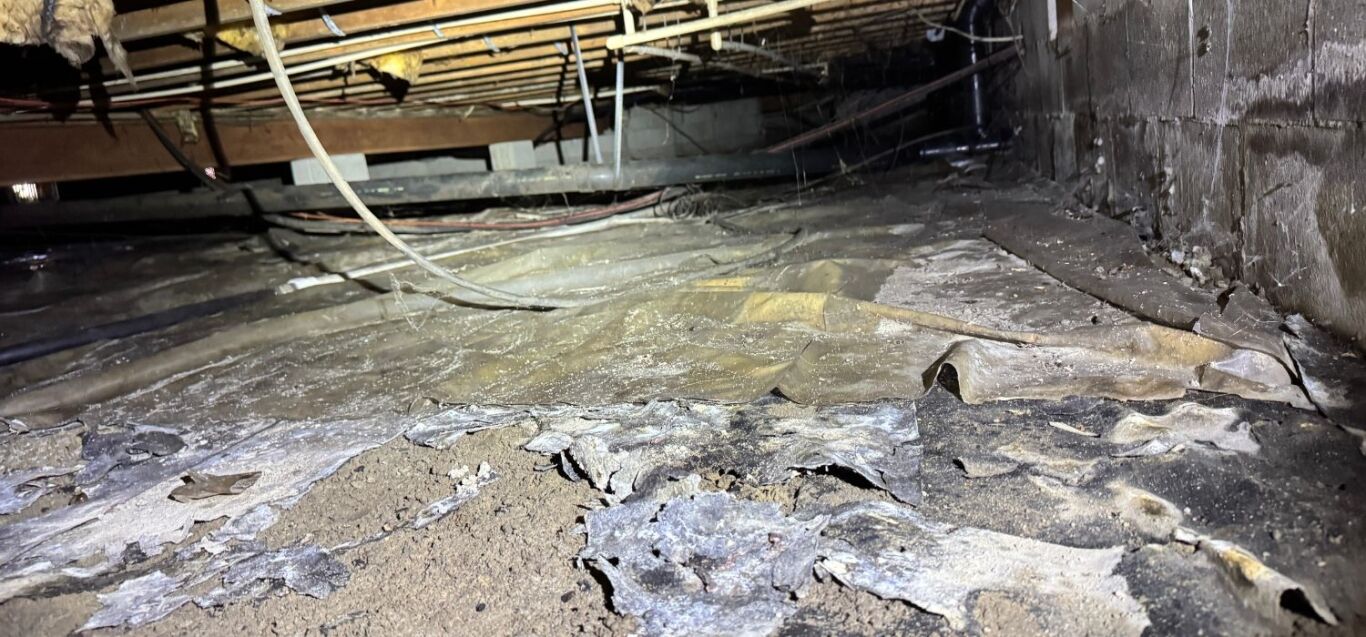
Old houses around here have earned their keep. Plenty of the homes in Lewes and Milton were framed up long before anyone heard the phrase “vapor barrier,” and they’re still standing, which tells you the people who built them knew what they were doing. The trouble is that the way those houses were designed to handle moisture and the way late-summer weather behaves on this coast don’t line up as neatly as they used to.
If you own a place with hand-hewn joists, a brick pier foundation, or a crawl space you have to army-crawl through, you’ve probably been told to “just encapsulate it.” That advice isn’t wrong, but the how matters a lot more in a 130-year-old house than it does in a 2015 build. Waterproofing older homes in Lewes, DE, takes a different sequence, different materials in a few spots, and a little more patience.
Here’s how we think about it, and what tends to go sideways when the retrofit gets rushed.
August and September are the pressure test. The National Oceanic and Atmospheric Administration’s (NOAA’s) National Hurricane Center pegs the statistical peak of Atlantic hurricane season right around September 10, and even the storms that never earn a name can dump several inches in an afternoon. NOAA’s climate normals put annual rainfall in this stretch of Sussex County near 45 inches, and a good chunk of that shows up in a handful of heavy events rather than a polite drizzle spread across the calendar.
By late August, the ground is already holding water. The water table sits high, especially anywhere close to the canal or the marsh, so a storm doesn’t have much soil left to soak into. Water goes sideways instead, finds the path of least resistance, and that path is very often the gap between an old foundation and the dirt packed against it.
Then there’s the part nobody sees. Warm, soggy air drifts into a cool crawl space and hits surfaces that are 10 or 15 degrees Fahrenheit below the dew point. Wood sweats. You get condensation on joists and ductwork without a single drop of rain making it inside. The Environmental Protection Agency notes that mold can take hold on damp material within 24–48 hours, so a wet week in September is plenty of runway.
Air also travels upward through a house. Whatever is sitting in that crawl space, musty smell and all, ends up in the rooms where your family sleeps.
Modern crawl spaces are boring in the best way. Poured footings, block walls, flat surfaces, decent headroom. Historic construction around Lewes rarely gives you any of that.
You’ll run into fieldstone and rubble foundations with no continuous footing under them. Brick piers laid in lime mortar, which is softer and more forgiving than the Portland cement mixes used today, and which doesn’t react well to being sealed with the wrong product. Dirt floors that were hand-dug and never leveled. Clearance so tight that a standard sump basin won’t physically fit without excavation. Sill beams sitting directly on masonry with no capillary break, quietly wicking moisture upward for a century.
Historic home crawl space repair in Lewes, DE, starts with reading all of that before anybody unrolls a liner. Old masonry needs to release moisture rather than trap it, so slapping a sealed system against a lime-mortar wall without a plan for where the water goes can push the problem into the brick itself. Spalling, crumbling joints, and salt deposits on the interior face are the usual signs that somebody skipped this step.
Termite inspection strips matter here too. Building codes generally call for a few inches of exposed foundation at the top of the wall so an inspector can spot mud tubes. On a home that predates modern pest treatment, giving up that visibility to gain a little coverage is a bad trade.
Sequence is most of the job. Doing these steps out of order is how people spend real money and still end up with a damp crawl space.
Grading and roof runoff cause more crawl space problems than anything happening underground. A downspout dumping against a 150-year-old brick foundation is soaking the exact material least able to handle it. Extensions that carry water 8 or 10 feet out are cheap, they’re reversible, and on older homes they sometimes solve two-thirds of the issue before you’ve touched anything structural.
A perimeter French drain tied to a sump pit gives groundwater somewhere to go instead of pooling under your floor. Low clearance complicates the basin, and on some historic properties we’re working around old plumbing runs, buried brick rubble, or a pier that can’t be undermined, so the layout gets custom. We use Zoeller pumps and typically add a battery backup along with a Wi-Fi alarm, because September storms and power outages tend to arrive together.
A 16-mil liner across the floor and up the walls is the workhorse. A 6-mil option exists when budget is the deciding factor, though on an irregular stone foundation the heavier material handles the abuse better. Fastening is where old houses get interesting, since there’s no flat surface to seal against. Mechanical attachment and detailing around each pier takes longer than a straight run in a newer home, and it’s worth the extra hours.
This is the part people skip. Sealing an old crawl space without adding a way to remove moisture is how you build a terrarium. We install AprilAire dehumidifiers sized for the space, and once humidity holds in a reasonable range, the wood stops sweating, and the musty smell fades. Field research on closed crawl spaces found roughly 15% lower heating and cooling energy use compared with vented ones, so the comfort upgrade tends to show up on the utility bill too.
Sagging floors, rotted joist ends, and piers that have settled into soft soil all get easier to fix when the crawl space is dry and accessible. Support piers, mid-span beams, and sistered joists handle most of it, and we bring in a structural engineer when the load path is unclear or the damage is widespread. Nobody should guess on a house this old.
Kemko epoxy injection works beautifully on poured concrete. On historic brick and lime mortar, repointing with a compatible mix is usually the correct call instead, because a rigid modern patch in a soft old wall creates stress somewhere else. Foundation waterproofing in Milton, DE, runs into this constantly, since so much of the older housing stock there sits on masonry that predates Portland cement entirely.
Both Lewes and Milton have historic districts with review processes, and Lewes has an active Historic Preservation Commission. Most crawl space work happens out of sight and doesn’t raise any flags, but anything visible from the street can. Vent covers, discharge lines, exterior drain outlets, and downspout extensions along a front elevation are all worth checking on before installation day.
It’s a quick phone call to the town, and it beats redoing the work. If your home is in a district, mention it early so the design accounts for it.
Before the next system spins up the coast, walk your property and look for these:
Any one of those is a reason to take a closer look. Two or three together usually means water has been getting in for a while.
Old houses reward people who take the time to understand them. A good waterproofing service in Lewes, DE, should be asking about your foundation type and your grading before quoting a liner, and should be comfortable saying that a downspout extension might solve more than a full system would.
At DryTek Crawlspace Solutions, we’ve been working on Delmarva crawl spaces since 2006. We’re certified with the Maryland Home Improvement Commission, and we’re certified installers for AprilAire dehumidifiers, and we back our work with a one-year workmanship warranty. If you’d rather stay ahead of problems than react to them, ask about our annual maintenance program while we’re out there.
Estimates and consultations are also free, so if something under your house has been bothering you, contact us, and we’ll take a look before the next storm does.
Business Name: DryTek Crawlspace Solutions
Address: 818 Brown St, Salisbury, MD 21804
Phone: 410-543-4848
Secondary Number: 302-468-1811
Business Hours:
Monday - Thursday: 8:00 AM to 4:00 PM
Friday: 8:00 AM to 12:00 PM
Saturday & Sunday: Closed
Salisbury, MD • Ocean Pines, MD • Ocean City, MD • Fruitland, MD • Delmar, MD • Berlin, MD
Milford, DE • Milton, DE • Georgetown, DE • Lewes, DE • Bethany Beach, DE • Ocean View, DE

Up to $150 off Military / Veteran / First Responder