
Updated November 11, 2026. Reviewed by K.C. Conaway, owner of DryTek Crawlspace Solutions.
Every November, the same question comes up in homes across Delmarva: crawl space vents open or closed? The quick answer is to close your foundation vents once nighttime temperatures drop below freezing. That keeps cold air off your pipes and the underside of your floors. The bigger answer matters more. On the Delmarva Peninsula, a vent that closed in winter usually reopens in spring, and that’s when humid air off the Chesapeake Bay, the coastal bays, and the Atlantic moves right back in. Below is how to handle this winter and end the open-and-close cycle for good.
Direct Answer
Close crawl space vents when nights fall below freezing to keep cold air off your water lines and floor. Reopening them in spring isn’t the fix in humid Delmarva, because open vents let damp summer air in. The lasting solution is to seal them permanently as part of crawl space encapsulation.
TL;DR
- Close foundation vents when nights are forecast at 32 degrees Fahrenheit or colder.
- In Salisbury, average overnight lows sit below freezing from December through February.
- Opening vents in summer lets humid air in, which condenses on the cooler crawl space framing.
- Closing vents protects pipes during winter, but it doesn’t solve crawl space moisture issues.
- The lasting fix is a sealed, conditioned crawl space with sealed vents, insulated walls, a vapor barrier, and a dehumidifier.
One-liner: Close the vents this winter, then seal them for good.
Key Numbers
| Stat | What It Measures | Source |
|---|---|---|
| 32 degrees | Forecast low, that means close the vents | Freezing point of water |
| 28 degrees | Normal January low in Salisbury, the coldest month | National Weather Service, 1991 to 2020 normals |
| December to February | Months when Salisbury’s normal lows sit below freezing | National Weather Service, 1991 to 2020 normals |
| Below 60% | Crawl space relative humidity target, often 50% to 55% | DryTek Crawlspace Solutions |
| $13,500 to $18,000+ | Encapsulation for a 1,500-square-foot Delmarva home | DryTek pricing guide, 2026 |
| $2,300 to $2,800 | Crawl space dehumidifier, installed | DryTek pricing guide, 2026 |
Crawl Space Vents Open or Closed: The Delmarva Answer
In short: Close the vents for freezing nights, then seal them for good.
Picture one vent on two different days. On a 25-degree January night, it pulls freezing air across your pipes and floor framing. On a muggy July afternoon, the same opening lets in warm, wet air that settles on cooler wood and ductwork. Closing the vent handles the first problem. Sealing it handles both.
Why Opening Crawl Space Vents in a Humid Summer Backfires
In short, summer air through open vents brings moisture in rather than drying the crawl space.
Opening crawl space vents in summer adds moisture instead of drying the space. The U.S. Department of Energy (DOE) warns that warm, moist outdoor air drawn in through foundation vents during summer can raise moisture levels beneath a home. That moisture condenses on cool surfaces, such as floor joists.
Think of a glass of iced tea on a July porch. The glass is colder than the surrounding air, so water beads on the outside. Your crawl space works the same way. The soil keeps it cooler than the outdoor air, and DOE research notes that summer air often has a dew point higher than the temperature of crawl space framing. When that air hits the wood, it sweats.
Delmarva makes this worse. Delaware’s own climate guidance states that crawl spaces in the state are prone to moisture and mold due to the humid climate. The DOE also reports that existing vented crawl spaces have had serious moisture and mold problems.
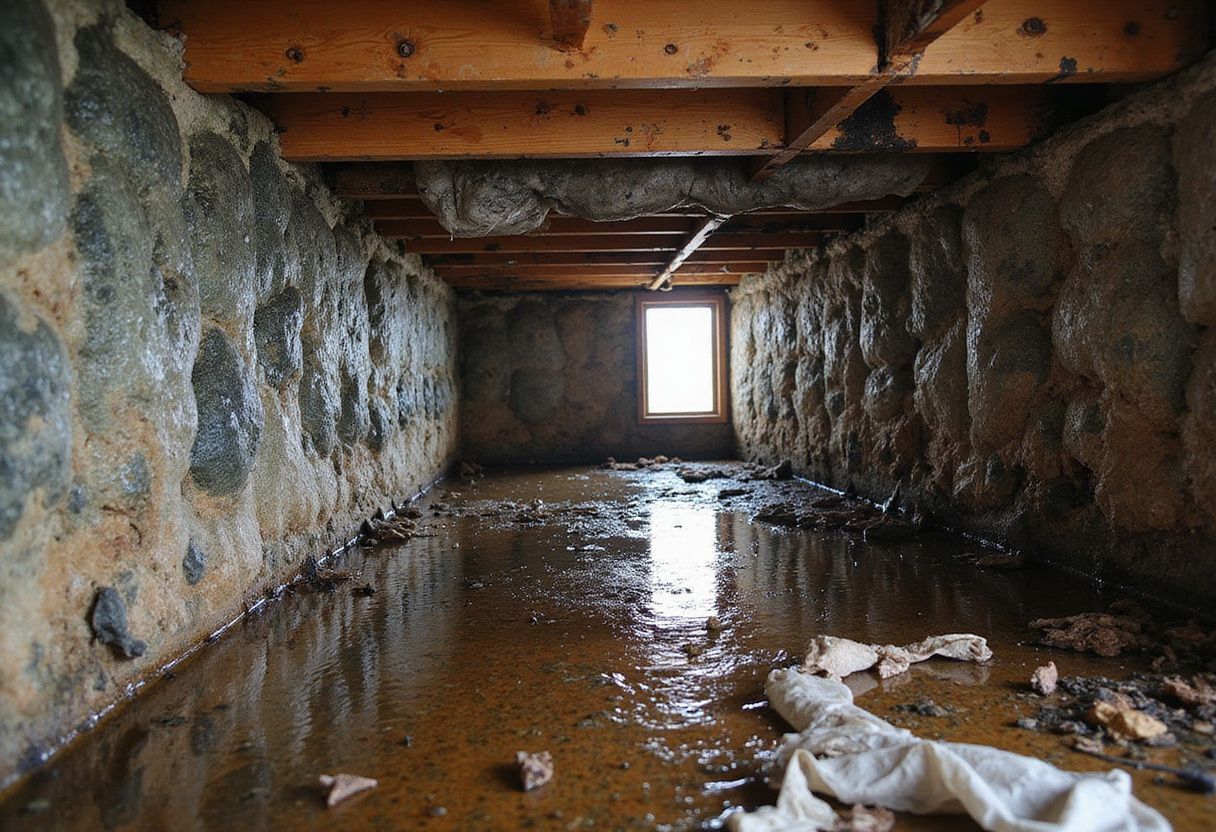
Signs it’s already happening: damp or sagging insulation, a musty smell upstairs, and ductwork that drips in August.
Should Crawl Space Vents Be Closed in Winter?
In short: Yes, once freezing nights arrive, if your crawl space is still vented.
Yes. If your crawl space is still vented, close the foundation vents or fit vent covers once freezing nights arrive. An open vent lets cold air pour across water lines, and one windy night in the 20s can be enough to freeze an exposed pipe. Closed vents also mean warmer floors and less heat leaking out from under the house.
Frozen pipes are the main risk, and closing vents only lowers it. Pipes stay protected for good when the cold never reaches them. The DOE notes that when foundation walls are sealed and insulated, piping and ductwork are located within the home’s conditioned space and don’t require their own insulation. That’s why crawl space wall insulation, paired with sealed vents, beats wrapping pipes every fall.
At What Temperature Should Crawl Space Vents Be Closed?
In short: When nights are forecast at 32 degrees or colder.
Close them when the forecast calls for nights at 32 degrees or colder, the point at which water freezes. Don’t wait for the first hard freeze.
On Delmarva, that window is predictable. National Weather Service normals for Salisbury show average lows dipping below freezing from December through February, with January the coldest at 28 degrees.
| Month | Normal Low in Salisbury (F) | Vent Action |
|---|---|---|
| November | 37.9 | Watch the nightly forecast |
| December | 31.4 | Closed |
| January | 28.0 | Closed |
| February | 29.2 | Closed |
| March | 35.2 | Watch the nightly forecast |
These are averages, so single nights run colder, and a waterfront home in Ocean City will not track an inland home in Delmar night for night. Use the forecast for your own address, not the calendar alone.
When To Close Crawl Space Vents on Delmarva
In short: In late November, before the first forecast freeze.
Plan to close them in late November, before the first forecast freeze, and pair it with other fall chores like shutting off outdoor hose bibs. That way, the vents are already shut when December brings steady freezing nights.
Spring is the harder call. Leaving vents open all summer allows damp air to return under the floor, so the stretch between the last frost and the first humid week is the best time to plan a permanent seal. Close them this fall, then fix them for good.
How To Close Crawl Space Vents for Winter
In short: Look in, clear each vent, cover every opening, seal the edges, and check your pipes after the first cold snap.
You can do this from outside on most homes. Here is the routine.
- Look in first. Note any standing water or soaked insulation. The DOE ties closing vents for good to a dry crawl space, so water you find now needs fixing before any permanent seal.
- Clear each foundation vent of leaves, mulch, and nests.
- Close built-in louvers, or press a snug vent cover over every opening. Skip one, and cold air still gets in.
- Seal the edges of each cover with weatherstripping or tape so wind can’t slip around it.
- After the first hard cold snap, check exposed pipes and look for new puddles.
Found water in step 1? Close the vents anyway on freezing nights to protect the pipes, then book an inspection so the source gets found.
How To Seal Crawl Space Vents Permanently
In short: A permanent seal blocks the vents, insulates the foundation walls, covers the ground, and controls humidity, with drainage as a first line of defense if water gets in.
Closing a vent is like shutting a window for the night. Sealing it is like weatherproofing the whole room. A permanent seal functions as a single system, and the DOE’s Building America guidance lays out its core: block and seal the foundation vents, then insulate the foundation walls with spray foam or rigid foam.
In a DryTek crawl space encapsulation, that system usually includes:
- Closed-cell spray foam to air-seal vent openings and gaps
- A 16 mil vapor barrier over the ground and up the walls
- An AprilAire dehumidifier to control the air that stays inside
Water comes first. If water is seeping in, a drainage system goes in before the space is sealed, so the barrier sits on a dry base.
For a 1,500-square-foot home on Delmarva, encapsulation typically runs $13,500 to $18,000 or more, about $9 to $13 per square foot. DryTek’s pricing guide breaks down what moves that number.
What a Sealed, Conditioned Crawl Space Changes
In short: A sealed, conditioned crawl space eliminates the need for seasonal venting and keeps pipes, ducts, and humidity under control year-round.
Once the vents are sealed and the space is conditioned, the seasonal routine goes away.
| What Changes | Vented Crawl Space | Sealed, Conditioned Crawl Space |
|---|---|---|
| Winter | Vents are closed by hand each fall | Nothing to close |
| Summer | Humid air enters and condenses on framing | Outside air stays out |
| Pipes and ducts | Exposed to cold drafts | Inside the home’s conditioned space |
| Relative humidity | Rises and falls with the weather | Kept below 60%, often 50% to 55% |
| Pests | Open vents give rodents and insects a way in | Sealed openings help keep them out |
The dehumidifier is what keeps readings in that range through a humid Delmarva summer. A crawl space dehumidifier typically costs $2,300 to $2,800 installed, plus about $750 if the unit needs its own electrical circuit.
Get your crawl space ready for winter
In short: Close the vents now and book a free estimate to plan the seal before spring.
Close your vents before the first freezing night, then use the months leading up to spring to plan the permanent fix. DryTek Crawlspace Solutions inspects crawl spaces from Salisbury to Lewes and can lay out a sealing plan that pairs encapsulation with crawl space dehumidification. Call 410-543-4848 in Maryland or 302-468-1811 in Delaware for a free estimate, and get it on the calendar before the humid season returns.
Frequently Asked Questions
In short: Six quick answers on vapor barriers, warmer floors, dehumidifiers, timing, code, and doing it yourself.
Can I close crawl space vents if I don’t have a vapor barrier?
Yes, on freezing nights, to protect your pipes. Closing them for good is different. The DOE ties permanent closing to a dry crawl space, so a bare dirt floor needs a ground cover and moisture control before the vents are sealed year-round.
Does sealing crawl space vents make floors warmer?
Usually, yes. Sealed vents and insulated foundation walls cut the cold drafts that chill the floor above. DryTek’s encapsulation work is designed to keep floors warmer in winter and indoor temperatures steadier year-round.
Do I still need a dehumidifier after sealing the vents?
In most Delmarva homes, yes. Sealing blocks outside air and ground moisture, but the air already inside still needs active control. A dehumidifier maintains a sealed crawl space within a steady humidity range throughout the summer.
How long does it take to permanently seal crawl space vents?
It depends on the size of the crawl space, how easy it is to reach, any existing moisture problems, and whether drainage or a sump pump is needed. An inspection comes first, and the timeline follows from its findings.
Is it against code to seal crawl space vents?
Not when the crawl space is built as a conditioned space. The DOE notes that model codes allow conditioned crawl spaces with a continuous ground cover, insulated perimeter walls, and conditioning. Your local building department has the final word on what applies to your home.
Can I seal crawl space vents myself?
You can close and cover vents yourself each fall. A permanent seal is a bigger job. It involves spray foam, a vapor barrier on the ground and walls, humidity control, and sometimes drainage, and any active water has to be fixed first. An inspection shows what your crawl space needs.
Definition Bank
| Term | Meaning |
|---|---|
| Foundation vents | Openings in the foundation wall that let outside air into a crawl space. |
| Vent covers | Fitted covers that close foundation vents for the season. |
| Conditioned crawl space | A sealed crawl space is treated as part of the home’s conditioned space. |
| Crawl space encapsulation | Sealing a crawl space with a vapor barrier, air sealing, insulation, and humidity control. |
| Vapor barrier | A plastic liner over the ground and walls that blocks moisture from the ground. |
| Closed-cell spray foam | A dense foam insulation that also air-seals gaps. |
| Relative humidity | How much moisture the air holds compared with the most it could hold at that temperature. |
| Dew point | The temperature at which moisture in the air turns into water on a surface. |
| Condensation | Water that forms when humid air comes into contact with a cooler surface. |
Quick Facts
DryTek Crawlspace Solutions
| Property | Value |
|---|---|
| Phone | 410-543-4848 (Maryland), 302-468-1811 (Delaware) |
| Owner | K.C. Conaway |
| Dehumidifiers | AprilAire |
| Vapor barrier | 16 mil |
| Service area | Delmarva, Maryland, and Delaware towns |
DOE Crawlspace Insulation fact sheet
| Property | Value |
|---|---|
| Publisher | U.S. Department of Energy |
| Number | DOE/GO2000-0774 |
| Date | December 2000 |
| Key point | Summer air through foundation vents can raise crawl space moisture |
NWS Salisbury normals
| Property | Value |
|---|---|
| Publisher | National Weather Service Wakefield |
| Station | Salisbury (SBY) |
| Period | 1991 to 2020 |
| Coldest month | January, 28.0 F normal low |
Sources
- U.S. Department of Energy, Technology Fact Sheet: Crawlspace Insulation, DOE/GO2000-0774, December 2000
- U.S. Department of Energy, Building America Top Innovation: Unvented Crawlspace Code Adoption, 2013
- Delaware Department of Natural Resources and Environmental Control, I-ADAPT: Vapor Barrier/Crawlspace Encapsulation
- National Weather Service Wakefield, Salisbury (SBY) Climate Records, 1991 to 2020 normals
- U.S. Department of Energy Building America Solution Center, Vented to Unvented Crawl Space checklist
- DryTek Crawlspace Solutions, Crawl Space Pricing Guide, Delmarva
- DryTek Crawlspace Solutions, Crawl Space Dehumidification
- DryTek Crawlspace Solutions, Crawl Space Encapsulation
- DryTek Crawlspace Solutions, Crawl Space Insulation
