Join Our Annual Maintenance Program!

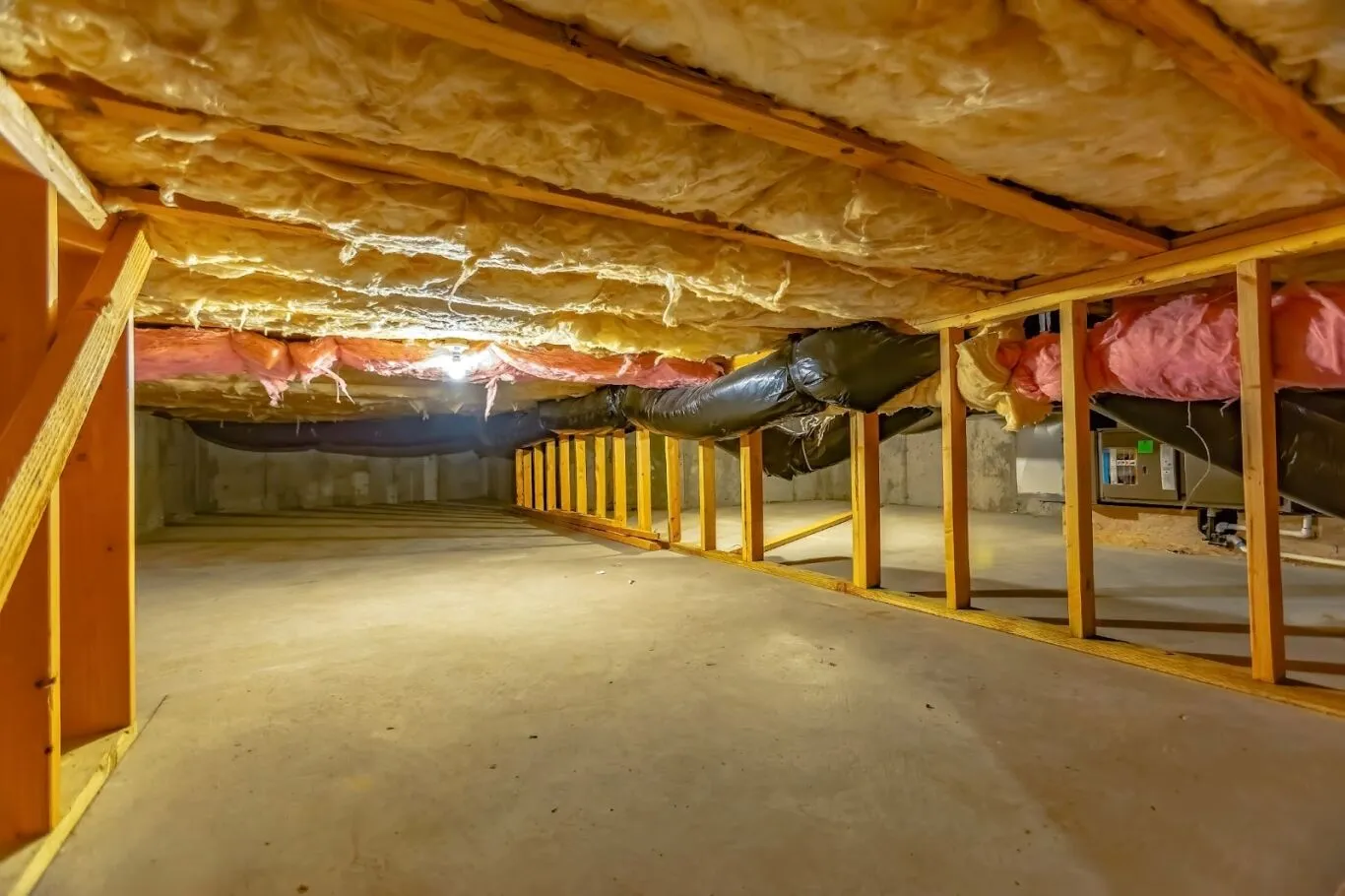
Are you tired of musty smells, high humidity, and cold floors under your home?
This post shows quick fixes like removing wet subfloor insulation, treating mold the right way, choosing a durable vapor barrier, and adding a proper drainage system with a sump pump and dehumidifiers.
A lot of mold remediation companies leave the subfloor insulation in place, but that’s actually a common mistake when doing a crawl space encapsulation. Moisture can get trapped against the subfloor, creating the perfect environment for mold to grow behind the insulation where you can’t easily see it. In some cases, mold will even develop on the paper backing of the insulation itself.
When fiberglass is left under a vapor barrier, it can end up hiding mold colonies that might not show up until a home inspection, which can create problems when it’s time to sell. If you’re planning an encapsulation, it’s important to take a more thorough approach. Use a moisture meter to check conditions beneath the barrier, and consider adding radon and indoor air quality testing to make sure the space is truly clean and controlled.
Some contractors spray disinfectant without removing mold from crawl spaces. That tactic does not fix the problem, because mold must be physically removed for a true cleanup. You cannot sweep mold under the rug; hidden colonies stay behind and feed on wood, causing wood rot, health trouble, and a lower resale value.
Humidity should stay below 60% to control mold growth, and dehumidifiers do not kill mold.
Mold hides where you least expect it.
A proper plan ties mold removal to encapsulation, vapor barriers, and ventilation. Moisture extractors and good drainage, such as a french drain, help keep humidity low and protect crawl space repair and foundation repair.
DIY crawl space encapsulation mistakes often start with skipping these steps or with bad spray foam that hides problems. Bad work can spill into basement waterproofing too.
Skipping a drainage system can cause trouble for homeowners. Water often stands in crawl spaces when there is no proper drainage. This standing water poses risks to the home’s structure, leading to wood rot and mold growth.
An effective drainage system should meet the unique needs of each crawl space’s floor type and slope. It typically includes essential tools like sump pumps and dehumidifiers.
Using low-quality materials for encapsulation can spell disaster. Many contractors cut corners, using subpar vapor barriers and insufficient sealing tapes. This approach leads to moisture entering your crawl space and fosters mold growth, wood rot, and other problems down the line.
Choosing strong materials like 20-mil vapor barriers paired with reliable tape makes a real difference. These high-quality options create an effective barrier against moisture.
Installation matters just as much as material choice. Even top-notch products can fail if not installed properly. Common errors include leaving gaps around support columns or poorly sealed seams; these mistakes offer easy entry points for water.
Don’t let inadequate choices haunt your home; take action now to protect your property from significant repairs later on!
Avoiding these mistakes can save you a lot of trouble. Homeowners often make errors that lead to bigger problems later on. Removing subfloor insulation, ignoring mold issues, and skipping drainage systems are just a few examples.
Proper encapsulation keeps your home safe from moisture and pests while boosting energy efficiency. Remember, a little extra attention now prevents major headaches down the road!
Skipping structural repairs is the top mistake. Rot, sag, or bad footings will ruin a new liner. Fix structural repairs first. Use concrete lifting if slabs need work.
Yes, do pest control and a full clean space prep. Condensation hides bugs and mold. Clear debris and nests first.
Yes, the plan shifts by climate. Maryland faces high humidity and more condensation. A local pro will follow the right building code.
Often yes, it boosts energy efficiency and cuts drafts. It also tames condensation when done right. Think of it like a coat for your home. Do the prep and hire a trusted crew, or you may pay twice.
Business Name: DryTek Crawlspace Solutions
Address: 818 Brown St, Salisbury, MD 21804
Phone: 410-543-4848
Secondary Number: 302-468-1811
Business Hours:
Monday - Thursday: 8:00 AM to 4:00 PM
Friday: 8:00 AM to 12:00 PM
Saturday & Sunday: Closed
Salisbury, MD • Ocean Pines, MD • Ocean City, MD • Fruitland, MD • Delmar, MD • Berlin, MD
Milford, DE • Milton, DE • Georgetown, DE • Lewes, DE • Bethany Beach, DE • Ocean View, DE

Up to $150 off Military / Veteran / First Responder